Walleye Spinner Fishing - Prime Time Basics

LOW450-5474.jpg

Walleyes are on a serious chew right now in most of the local lakes you fish.  Sure, there are lulls in activity and certain days are better than others, but you couldn’t pick a better time to wet a line.  An exceeding demand for bait stretches the available supply as most lake systems are just ramping up in biological activity.  Baitfish are spawning, but that young-of-the-year flush isn’t of snack-size just yet, so predators lean on what food is currently available in the system.  Couple that with the fact that the predator fish’s metabolism is requiring more energy, and you have a recipe for some steady fishing.

What goes up, must eventually come down however, and in the coming weeks you’ll see a slow and steady decline in the amount of suicidal walleyes you encounter.  Fish will push out of the shallows and emerging weeds to more mid-lake structural elements and the outer edge of weedlines.  They’ll also encounter some of the first hatches of the year, and that’s when you’ll be ready to pull spinners.

When To Pull Spinners

The first major hatch of the year has always been a great time to start pulling spinner rigs, crawler harnesses, or whatever local name you’re used to calling them.  Spinners are not exclusive to the bait they carry, but nightcrawlers on the business end of your rigs will reap benefits as mayfly and caddis nymphs burrow out of soft lake bottoms then travel to the surface.  Walleyes eat more bugs than people realize, and spinners featuring a crawler presentation offer an enticing package of vibration, flash, and bug-like meat on the end of the line. 

Of course, you’re looking for the right fish in the right locations to pull on too.  Spinner fishing is typically a moderate speed approach to finding and catching walleyes, so you’re looking for fish that are near bottom, spread out along long breaks and occasionally clustered in pods across structural elements. 

Usually, your electronics will tell you what speed approach is best.  Fish scattered few and far between are often better suited for crankbait fishing, at least until you find them.  Fish tightly concentrated in small areas call for slower approaches like slower live-bait rigging or vertical jigging.  So often though, we’re faced with a mixture of both, such that the medium speed approach of spinners pulled in the 1.0 – 1.5 mph range doesn’t put all of your eggs in one basket.

Multiple Speeds

Given the preponderance of fish so often strewn across a break, and our tendency to find pods of fish as we continue to pull, the problem with traditional spinners has always been that speeds less than 0.8 mph or so, depending on the size and shape of the blade, don’t reliably turn the spinner blades for max attraction.  That’s where butterfly blades and smile-style blades come in. 

Both butterfly and smile blade designs turn at slower speeds allowing anglers the ultimate flexibility in pulling at standard speeds to find and encounter more fish, while dropping down to as slow as 0.25 mph over concentrations of fish you want to really stare at your presentation.  You cover two of the 3 major walleye speeds of delivery with a single system, giving you the ability to fine-tune your presentation as you go.  Smile blades have been around for some time, and are a bit more bendable, but aren’t as durable or put off as much vibration as the more rigid butterfly designs. 

Weight Systems and Extras

Using the right weight style, and appropriate size is paramount to success when fishing spinners of any variety.  Most anglers pull these rigs on a wire bottom-bouncer, with a general rule of thumb being one ounce of weight for every 10 feet of water you’re pulling in.  Bottom bouncers work great in most situations, but even taller weighted “sticks” are the order of the day for jagged rocks, logs or other extremely irregular bottom.    

Floats are another addition for many spinner anglers in snaggy conditions, or when fish are elevated a foot or more off bottom.  These are typically put in-line on the spinner rig, just in front of the hook, and can make all the difference with active fish. 

Slow-death style hooks with an irregular bend are another addition we’ve been seeing in recent years.  Proven over years on the tournament trail, this hooking method requires a special slow-death style hook, and a nightcrawler threaded all the way up the shank to the hook-eye.  The bend in the hooks and rigging of the crawler causes it to spin, and these style hooks are more commonly paired with spinners of all types these days. 

No matter how you pull a spinner rig, experiment with the various blades, additions, rigging methods, and weight systems covered here for the situation you’re facing on the water.  Pairing the right tweaks at the right time will have you prepared to zig when others zag, and have you fishing ahead of the curve. 
The Keys to Successful Jig Fishing

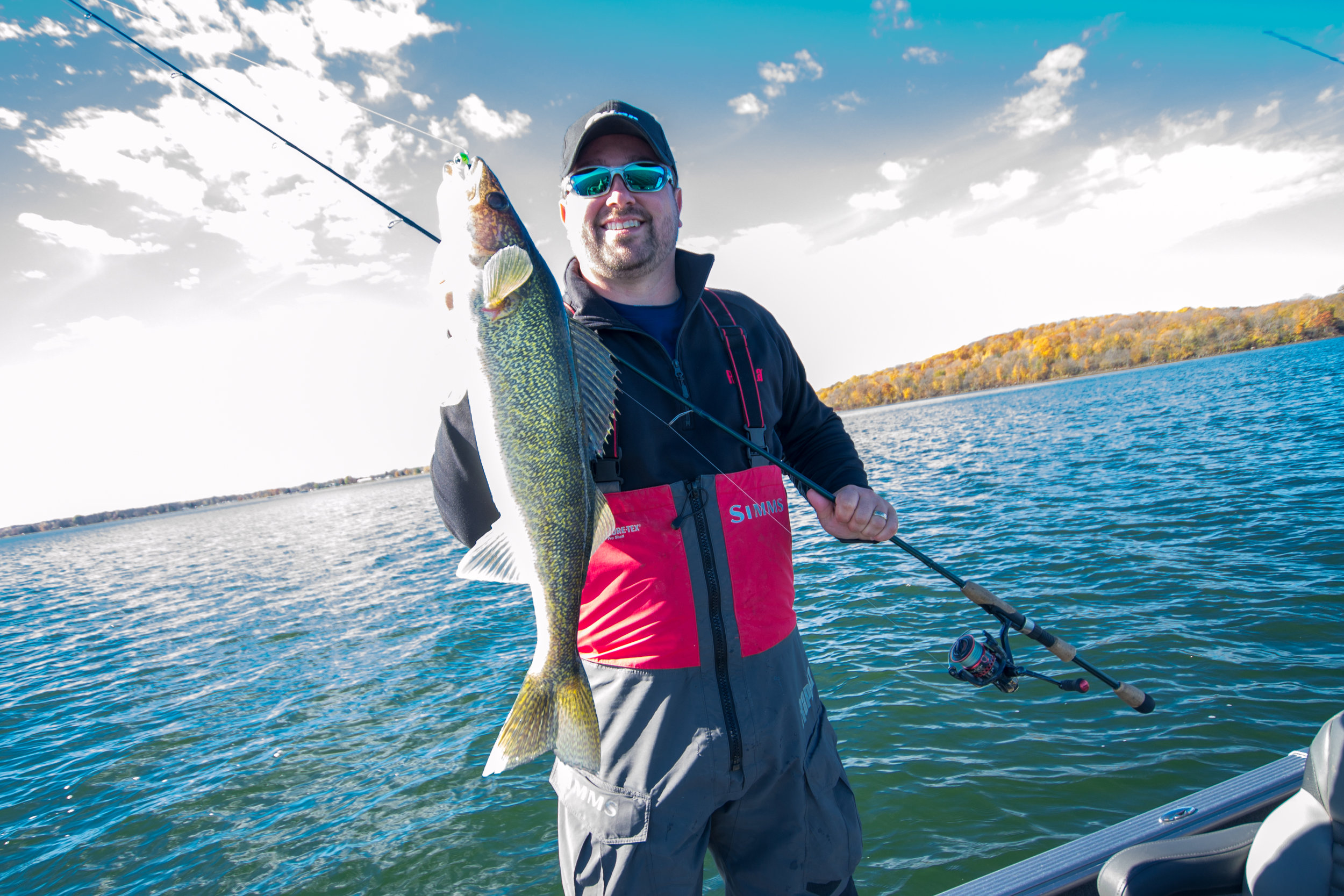
Few baits will ever be as successful as the plain lead-head jig.  As a bait-delivery method or a stand-alone option, it excels for multiple species throughout the country, moving water or stagnant, stained or clear.  It can be swam, hopped, plopped, dropped, dragged, shook, pitched, and fished vertically, among other presentations.  No matter how you choose to fish it, there’s a species that’ll eat it on every water body near you.  However, that doesn’t mean it’s necessarily easy to fish, and it can be downright challenging if you’ve never been much for jig-fishing. 

I learned to fish jigs on a river system in current, which is quite the curveball compared to natural lakes.  With moving water, you need to take into account more variables like sweep, casting angle, mono vs. braid, among others.  However, with a few pointers, anyone can catch fish with jigs.  Here’s a few to get you started in the right direction.

Use the Right Tools for the Job – Start with a lightweight, high-quality carbon-fiber (no fiberglass) rod in an Extra Fast (XF) action, along with a featherweight reel combination.  Jig-fishing, perhaps more than any other technique relies heavily on feel, and you simply can’t feel much with poor equipment.  While there are techniques that don’t require you to spend as much on a rod and reel, here’s one instance where you really get what you pay for, and better tech quite simply leads to more fish. 

Line – Start with braid and a fluorocarbon leader of a few feet in length, joined by an Albright Special or Uni-to-Uni knot.  This offers you the best ability to feel the jig, while still having some stealth with the nearly translucent fluorocarbon line up against the jig itself.  Mono can excel in certain situations, especially in current where the sweep and way it cuts through the water presents the jig differently, but braid offers you the best feel overall.

Map the Bottom – Your first couple of casts should be an exploratory mission, as you decipher clues that are telegraphed back to your rod-hand.  Cast out and let the jig settle to bottom.  Then slowly drag it back to you, hopping or with mixed-in quicker pulls along the way.  You’re actively figuring out substrate at distance, such that you can understand the big picture and where fish will be holding.  Like any experiment, start with a “control” retrieve, and compare various types of retrieves thereafter. 

No Cross-Wind Casting – No matter the orientation of shore or where you’re pitching, wind could be the single largest inhibitor to your catch-total for the day.  Position your back to the wind, or directly face it to enjoy far better direct contact with what your jig is doing.  Drift into a crosswind, and every fish in the lake could hit your bait on a single retrieve, and you’d never know it because of the huge bow in your line.  Wind triggers many fish species up shallow, so on these days, mitigate the effect by keeping your rod-tip close to the water and off to one side of the boat to reduce that problem.

Stay Back in Clear Water – Jig fishing can only be productive in the clear shallows when you’re not driving over fish.  In hyper-clear water bodies like Mille Lacs, this means fish spook in 10FOW or even more, meaning you have to stay over deep water and simply pitch a little bit further up to the zones you’d like to cover.

Fish From the Outside In – When fish are schooled up near cover, it pays to work your casts from the outside in.  As you pick off fish after fish from the outside, you have less chance of disturbing an entire school by casting up to the center of the most prime piece of cover.

When Vertical, Stay That Way – Vertical jigging works really well in deeper water, but only if you keep your rod tip directly over the top of the bait.  Poor boat control when fishing vertically leads to baits off bottom, and less ability to detect bites, especially when the bait is under the boat. 

Re-Bait – Whether plastics or live-bait, degraded or destroyed additions to a jig hinder the action and direct appeal.  Resist the temptation to leave it on for “one-more-cast” and put your best bait forward.  It’s amazing how selective fish can be at times, and at the end of the day you may only use a handful more minnows or plastic grubs.  Call that cheap insurance to a successful bite. 

Focus – Probably the single biggest deterrent to catching fish on a jig is distracted fishing.  If you prefer to doze off, drink coffee, or otherwise just relax, start trolling or bobber fishing.  The best jig anglers I know are machines.  They’re casting, processing bottom content, hooking walleyes, and positioning the boat for the next cast.  They’re mentally engaged nearly all of the time, as they pick apart pieces of structure bit-by-bit.  While it’s true that the more you pay attention for any fishing scenario, the more you’ll catch, with jig-fishing it’s absolutely critical.    

untitled-0148.jpg

What Jig to Fish & When

We are programmed to understand that not all lure types are created equal, with different baits serving different needs seasonally for varying species.  What about baits in the same class however?  While we grasp the thought that a jerkbait is not the same as a spinnerbait, we tend not to distinguish characteristics in-class, with jigs being no exception.  That said, there is a huge number of jig-styles, sizes, shapes, and colors, with all sorts of hardware and appendages molded-in or otherwise attached. 

I have my favorites, but I thought I would call in the advice of successful Dakotas guide and Northland Tackle Pro-Team Coordinator Cody Roswick.  Cody knows his way around both North and South Dakota, often using jigs to guide his clients to quality fish no matter where the bite takes him, or what technique the day calls for.  Like with most guides and pro’s I have fished with, small details frequently reap huge dividends, so it pays to pair the right jig to the scenarios you fish.  Here is a quick run-down of some popular styles, and how to go about choosing which variety to use, and when.  

Jigs For Minnows – These two are an original pairing that have stood the test of time, and Cody fishes them primarily during the early season.  With designs like the Fire-Ball that offer a secondary-eye to attach stinger hooks being extremely successful.  Having the option to attach that extra treble for short-striking fish can really be handy, even if you start the day without.  For larger minnows like shiners, consider this option or other jig types with a long shank that places the business end of the hook further back on the minnow. 

Jigs For Crawlers/Leeches – For the most part, you have quite a few options here, especially with leeches as provided you hook them in the sucker or just underneath, you will not have to worry too much about the hook holding your bait.  With crawlers however, you will want a keeper at the base of the jig ball itself to retain the bait and prevent it from sliding down the hook shank un-naturally. 

Jigs For Plastics – As water temperatures warm, live-bait options for walleyes lose favor to plastic imitations, but you will want some different jig designs for fishing them.  Cody says, “Wire barbs for keepers will prevent everything from bluegills to bass pulling at the tail end of the plastic all the way down to the hook bend.”  Roswick continues, “Not only does this rip your plastics option of choice, it frequently causes the bait to run un-true.”  Premium models that do the best job of avoiding this issue will have dual-barbs or wire-keepers that truly lock the plastic to the base of the jighead. 

Stand Up Jigs – Use this type of jig style in river areas when trying to drag bottom, or lakes when again trying to trace as close to the substrate as possible.  Often, bottom contact can be a crucial part of the presentation, and that is when stand-ups are worth their weight.  “These jigs shine in helping fish suck that bait off of bottom, as the hook points up and back at a 45 degree angle in their face,” mentions Cody.

Jig/Spinner Combinations – This group encompasses a number of jigheads from thumper-style models with a swivel and blade beneath them, to a whistler-style jig with an in-line twin-rotating blade.  Both perform similar tasks in creating flash and vibration to attract fish from distance.  “This can be important in river systems or natural lakes with limited visibility,” says Cody.  “I use them a lot with live-bait when fishing vertically, especially deep river systems.”

Current Cutter – Pill-Shaped Jigheads – Speaking of rivers, current-cutter style jigheads have made some strides in recent years, as the pill-shaped and more elongated design simply offers less drag in current.  “That allows you to fish lighter, while still getting down to the fish,” says Roswick, a key component to many river situations where current can keep a jig higher in the water column than you want it.

Floating Jigs – Of course, one of the best ways to stay near bottom is to rely on another weighting system other than the jig to keep you pinned there.  That makes floating jig head options a mainstay in many anglers’ boxes.  Present livebait in any manner with confidence, knowing your bait will float just above the snags.  Add some current to the mix, and many designs like the Gumdrop or Phelps-Floater will jog side to side like a crankbait for added action.

Hair Jigs -  Whether animal hair like bucktail, marabou, or other synthetic materials, these skirted jigs are often tipped with bait and presented both vertically or casted.  You will need different weights to satisfy the various depths, but hair is a great way to add bulk, color, and life to an otherwise plain offering.  In lakes and rivers, hair jigs do not get as much press as they deserve.

Weedless Jigs – Designs like the Weed Weasel and others with plastic deflectors in front of the hook point are classic heavy cover options.  Roswick who fishes the trees of North Dakota’s Devil’s Lake says, “They’re a mainstay for me anywhere near weeds or timber, and they have a heavy hook if you need to horse them out of nasty cover.”  Tip them with your live bait of choice, and consider them anytime you are afraid to throw other jig styles into the thick stuff. 

The Greatest Hunting and Fishing Buddies

IMG_20171019_131721_281.jpeg

I’ve been blessed with some really great hunting and fishing buddies over the years.  Very few of them complain, all but a handful are typically better behaved than I am, and most are pretty talented outdoorsmen in their own right.  As I grow older, I’ve had to bear the occasional loss of one of them, and it’s always difficult to come to grips with the thought that you’ll never share another day in the boat, or a morning in the turkey blind.  Yet places in time and even material things can also have this affect on us, as a certain farmpond will never be as good as it was during a late-May of my youth, and no shotgun will ever hold the same importance as the Winchester 1300 pump my dad gave me. 

So it was when I dropped off my old 1998 Tacoma to its new owner last week.  Don’t laugh, trucks are as much a part of the experience as any one of your friends or family, and you’ll definitely end up spending more time with them.  271,000 miles worth of time to be exact in the case of this truck.  I got it used more than 15 years ago, and took abuse from the get-go.  Few people I knew drove a "foreign car," let alone a truck, and fewer yet used them like I did.  It was equal parts ATV, farm truck, and highway vehicle, at times heavily leaning more towards the side of off-road exhibition vehicle.  It was safer on ice due to its small size and lighter weight, and I drove it as carelessly as I could, less cautiously than I should.  After all those miles and memories, the same friends and family that once ribbed me have gone through 2 or 3 trucks in the same amount of time.

Neil Young wrote a song about his favorite vehicle, an old Buick of all things, singing: “With your chrome heart shining, in the sun, long may you run.”  Or was it about a girl?  Though likely an unknown metaphor, it’s easy to see why he thought of that old Roadmaster having a heart.  Though we know these are just bolted-together contraptions of steel, plastic, and carpet, they also both share and make memories.  Like the time chasing turkeys on some hill in the pan-handle of Nebraska that the old Tacoma climbed such a steep grade, I felt gravity not just pushing me deep into the seat, but almost up and out of it like an astronaut headed for the Moon.  Or the numerous times it skinnied its way through forest rails, field roads, and ditches after everything from mallards to morels. 

It worked harder than it played, like the time we were building our house when I hooked it up to a few strands of grass-buried barbed wire, only to pull out about 100 yards of old fence-line as that little engine groaned.  Or the time I snapped both leaf springs loading mulch for a spring landscaping session.  I was mean, and it was kind.  No matter how much abuse I applied, it only required some gas weekly, oil annually, and new tires occasionally. 

Much like our own friends and family members, we look back and have our regrets.  My Tacoma was parked outside the last 10 years of its life, and I wish now it would’ve been inside.  Weather-checked tires, peeled paint, and rust give it character, but that’s no way to treat an old friend.  Neither were all the bumps, deep gouges, dents, and dings I carelessly applied over its long-life.  We never made it to collector’s plates together, and I’m the sole reason why. 

Still, when we say goodbye, we realize that goodbye is not forever.  This is especially true in the case of my old truck, as it’s going to an old friend in hills and valleys of Pepin County Wisconsin.  Last I talked to him, he’d already taken it around to all of his coon and coyote-hunting buddies to brag about how little he’ll be getting stuck this winter.  By the time this goes to press, my old truck has become someone’s brand-new-used truck.  Parts of it won’t change, as I requested to have the turkey feathers and molded old turkey beard on the dash remain as permanent fixtures.  At the same time, everything changes, nothing stays the same.  I know it’ll have a new dog box installed in the bed for a good group of respectable hounds, and I’m thinking that the 4WD shifter might be strapped into place from September through April.  It’ll be at home on the dairy farm, hauling calves, feed, and logs whenever called upon. 

So as I say so-long to another old friend, I know again, farewells are never permanent.  Sometimes if we look hard enough, and even more-so when we’re not searching, memories well up all around us.  Those beloved people, the places of our childhood, and the things that have been with us the longest can never truly be forgotten.  They continue on, just as we do, becoming more a part of us than what they meant to us.  No matter where they end up or how they get there, we remember them because we are them. 

Long may you run.

Dedicated to my late parents and the Mike Hernke Family. 

The Best Anglers Find Their Ice Spots Right Now

Ice-fishing has undergone an interesting transformation in the past few years especially.  As social media ice-thickness reports hit the internet by the hour, we get on ice collectively faster than we once did.  A legion of mobile ice-anglers get out in their portables sooner than ever, scouring at first the shallows then pushing deep as ice permits.  Yet there is a growing group of wheelhouse anglers that fish in comfort weeks and months later, waiting until the ice becomes thick enough to support both truck and drop-down trailer.  No matter which group you’re in, eventually you’ll hit the lake in search of fish, and just like in school it pays to do your homework.

As ice-anglers, our mobility though better than it’s ever been, is drastically limited by the reality and need to drill a hole in ice to gather information.  So why not put in the work when it’s easy?  Using electronics from a boat to find fish, and more importantly find areas that will gather fish, is far easier on a 60 degree fall day than a 10 degree winter one.  Yet it’s surprising to see so few anglers take advantage of the easy ice-scouting that presents itself in our fall months.  In all honesty, I never stop thinking about ice, and no matter when I’m fishing during the open water months, my mind is racing to determine locations that look “fishy” from an ice-angling perspective. 

Many times, these locations are consistent producers during all months, yet others are specifically good for ice and not during the bulk of the open-water period.  The latter types include shallow transitions from mud to sand, or sand to rock, as well as small gravel or rock patches marooned again in shallow weeds or non-like surrounding substrates.  Early ice fish push to these places, especially after sundown in clear-water systems.  Spots that are no larger than a kitchen table can seem impossible to drill out and find, while they stick out like a sore thumb on a side-scan of any random shoreline. 

Side-scan technology could be the number one asset to an ice-angler during this time of year, as few things hide from it, even in heavy weed cover or timber.  Even if you don’t own this technology, chances are you know someone who does and you could get out for a day on the boat with them.  Spend time getting to know the system in either case, and make sure to idle at the proper pace to provide the very best image you can.  In general, harder bottom areas show up brighter or “whiter” and soft bottom shows up darker, and aside from timber, fish-cribs, or other sunken gems, you’re looking for any break or transition in the substrate.  The more sudden that change is, often the more valuable it can be. 

For the early ice angler, think first about how you access the water-bodies you like to fish.  Chances are, even if you’re walking out on slick-ice that sleds and gear slide neatly over, your spots will be within a ½ mile of your access point.  So focus on the areas immediately adjacent to shore that are within a half-mile ice shuffle.  Shallow water usually provides the first opportunities to fish on safe ice, so don’t worry about anything more than 15 feet at first.    

That’s a great starting point, but realize that eventually you may head out with an ATV, snowmobile, or other ice vehicle.  As ice-thickness progresses, so too does the season and fishing locations.  The first-break off of shore is now another focus area and reason for a completely separate scan.  Stay within 100 feet or so of that break and complete another pass or two until you feel you both understand the variation in that break, and identify key points along it that may concentrate fish activity. 

If you know you won’t be pulling your house onto the lake until vehicle traffic is safe, you’re looking at mid-winter fish locations.  Off shore reefs, rock piles, or islands can be key locations to drop a wheelhouse, and are typically well-marked with many of the contour mapping options we have today.  That said, the devil’s in the details, and small changes in that structure are readily visible again with side-scan technology. 

The mistake many ice-anglers make at this point is marking the spot “generally.”  Just because you can find the underwater point, or even the spot on the rock-pile where boulders are largest, doesn’t mean you’re located on a part of the structure that gives you the best chance for success.  From experience, I can say that this kind of knowledge comes only from scanning it from a boat via multiple angles, dropping waypoints in various locations to pinpoint what you feel is the best location, then following that up on ice with underwater camera work to ensure you’re dropping down on fish. 

If all of this sounds quite involved for a few fish, I would agree.  That said, if you’re the kind of angler that always wonders what they’re biting like “over-there,” you can put much of that uneasiness to rest with a thorough accounting of what you’re looking at well before you drill the first hole of the season.  That type of inventory is without a doubt, best done without ice on the lake.